
Estimated Reading Time: 5 minutes
For many aspiring pilots, one of the most intimidating parts of beginning flight training isn’t learning how to land an airplane.
It’s getting through the aviation medical certification process.
Students with a history of anxiety, depression, ADHD, counseling, or certain medications may worry that something from their past could stand between them and the cockpit.
Fortunately, FAA medical certification policies have continued to evolve.
For certain applicants who meet specific requirements, the FAA now has Fast Track pathways that may provide a more straightforward route through the medical certification process.
And that could be good news for future pilots—and the flight schools ready to train them.
What Is the FAA Fast Track?
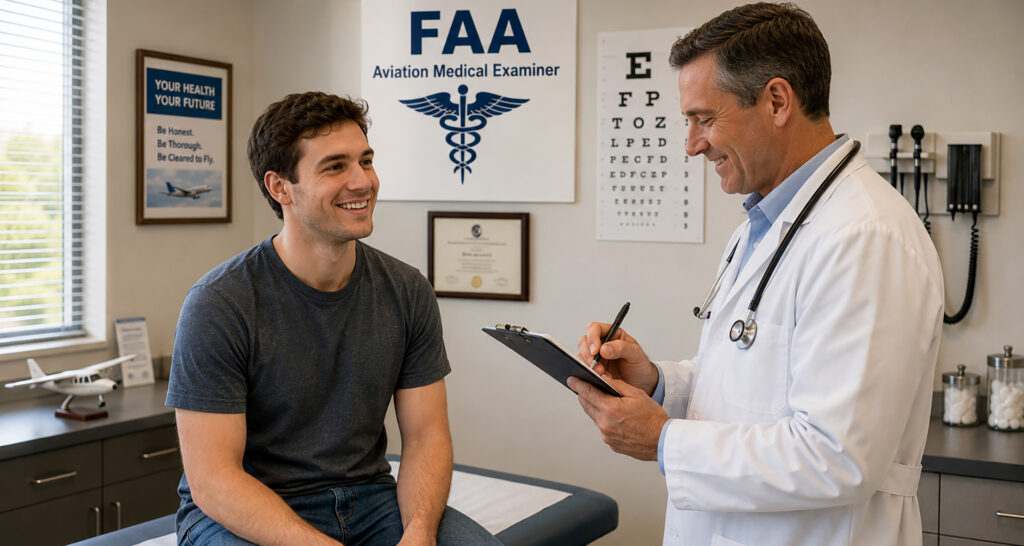
Before beginning flight training, many students pursuing an aviation career will need to obtain an FAA medical certificate from an Aviation Medical Examiner, or AME.
In some circumstances, a history involving mental health or ADHD can require additional documentation or FAA review.
The FAA now provides Fast Track pathways for certain qualifying applicants with histories involving anxiety, depression and related conditions, as well as a separate pathway for certain ADHD histories.
Fast Track doesn’t mean everyone automatically qualifies. Eligibility depends on the applicant’s individual medical history and whether they meet the FAA’s specific requirements.
But for those who do qualify, the pathway may make navigating the medical certification process more straightforward.laces additional pressure on aircraft availability.
Why This Matters to Future Pilots
Learning to fly is already a significant commitment.
Students are investing in aircraft time, instructors, ground school, exams, checkrides, equipment and more.
The last thing an aspiring pilot wants is to begin making that investment without understanding whether there could be an issue obtaining the medical certificate needed for their aviation goals.
That’s why prospective pilots with a relevant medical history should consider researching the requirements early.
Before investing heavily in training, understand your medical certification path.
A knowledgeable AME can help determine which FAA requirements may apply to your individual circumstances.
Flight Schools Can Help, Too
Flight schools don’t need to become experts in FAA medical certification—and they shouldn’t provide students with medical advice.
But they can help students by encouraging them to address medical certification early in their training journey.
Imagine an excited student beginning lessons, flying regularly and making great progress, only to discover later that additional FAA medical review is required.
Starting the conversation early can help students understand the process before they get too far down the road.
More Future Pilots Means More Demand for Training
Here’s where this becomes particularly interesting for flight schools.
As aviation continues working to create clearer pathways for qualified aspiring pilots, schools need to be prepared to train the students who walk through their doors.
That means having great instructors.
It means having a strong training program.
And, importantly, it means having aircraft available when students are ready to fly.
A student’s medical certificate can be ready. The instructor can be ready. The weather can be beautiful. But if there isn’t an aircraft available, nobody is going flying.
Where Eye Candy Aviation Comes In
At Eye Candy Aviation, we want to help flight schools prepare for growth.
Aircraft leasing gives schools another option for adding training capacity without tying up substantial amounts of capital purchasing additional aircraft.
That means funds can remain available for other important parts of the operation while the school gains another aircraft to help keep students flying.
Our goal isn’t simply to lease an airplane.
We want to become a partner in the growth of the flight schools we serve.
Because when more students get the opportunity to pursue aviation, schools need the fleet capacity to support them.
Open the Door—and Have an Aircraft Ready
Every aspiring pilot who successfully works through the FAA medical certification process represents something exciting: another person who may soon become a pilot.
For flight schools, that’s an opportunity.
When that next student walks through your door ready to begin training, make sure your school is ready for them.
And if adding another aircraft is part of that plan, Eye Candy Aviation is ready to help keep your students—and your school—moving forward.
Aviation Trivia
Did you know? The HIMS program has its roots in an aviation-industry effort created decades ago to help professional pilots dealing with alcohol and substance-related problems receive treatment and safely return to flying.
Important Note: FAA medical requirements depend on an applicant’s individual circumstances and can change. Students should consult current FAA guidance and a qualified Aviation Medical.
Examiner regarding their specific situation.